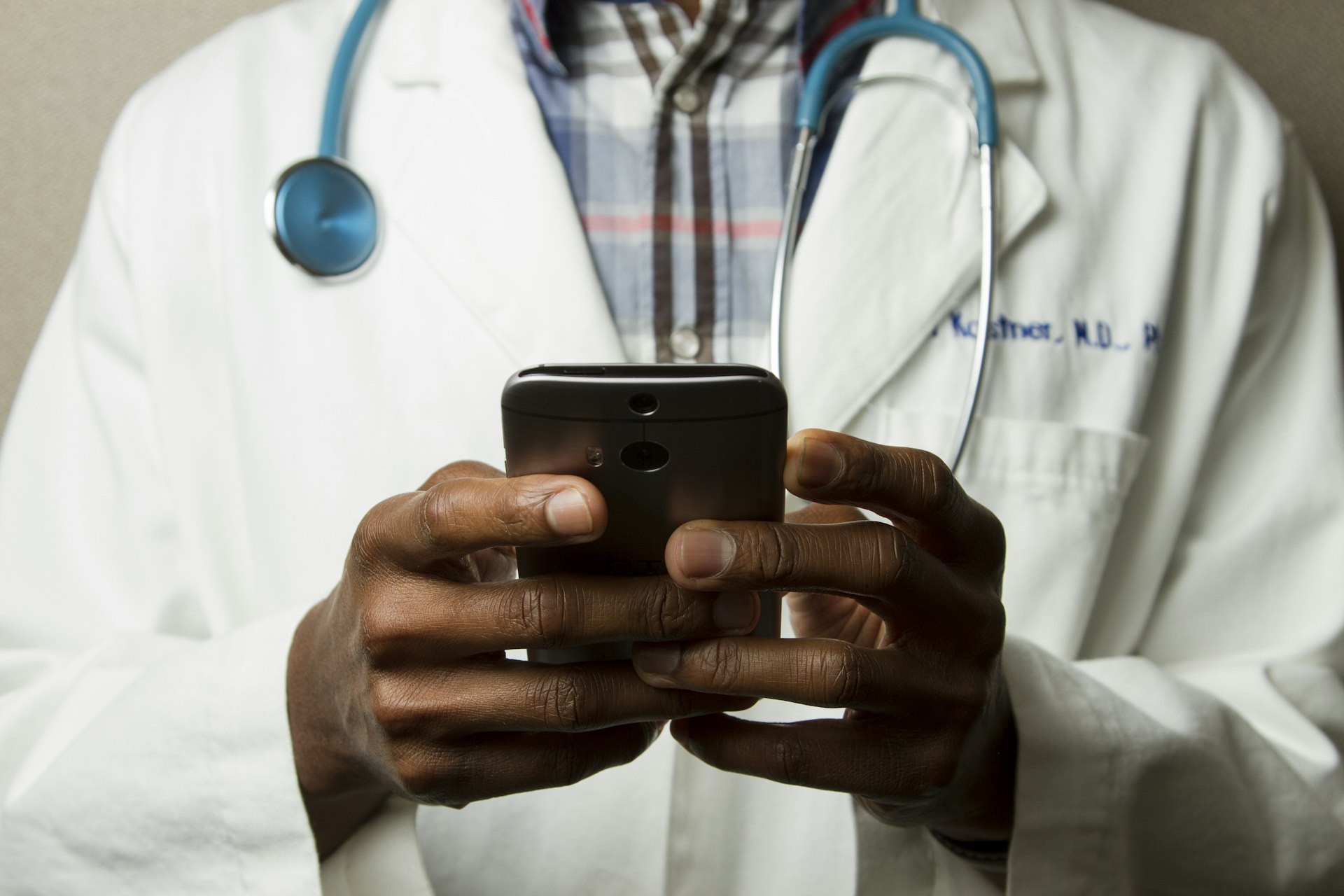
AI for Healthcare
Better Outcomes, Lower Costs
Transform patient care with AI. From clinical decision support to operational efficiency, we help healthcare organizations deliver better outcomes.
The Transformation of Healthcare Through AI
Healthcare stands at an inflection point. Rising costs, workforce shortages, increasing patient volumes, and the demand for personalized care are straining traditional approaches. At the same time, the volume of medical knowledge grows exponentially—over 800,000 new papers are published annually, far more than any clinician could ever read. AI offers a path through these challenges, not by replacing human judgment, but by augmenting it with data-driven insights, automated workflows, and predictive capabilities that were previously impossible.
The potential impact is enormous. AI can help diagnose diseases earlier when treatment is most effective. It can predict patient deterioration before it becomes critical. It can personalize treatment plans based on individual patient characteristics and outcomes data. It can automate administrative tasks that consume up to 50% of clinicians' time, freeing them to focus on what matters most: patient care. And it can accelerate research, bringing new treatments to patients faster.
But implementing AI in healthcare isn't like implementing AI in other industries. The stakes are higher—these are people's lives and health. Regulatory requirements like HIPAA and FDA oversight of medical devices add complexity. Integration with legacy EHR systems is challenging. Clinician adoption requires trust and demonstrable value. And perhaps most importantly, AI systems must be fair and unbiased, providing equitable care across all patient populations.
We understand these challenges because we've worked with healthcare organizations for years. We've deployed AI solutions in hospitals, health systems, pharmaceutical companies, and digital health startups. We know what works, what doesn't, and how to navigate the unique requirements of healthcare AI. This experience informs every solution we build.
Why AI is Essential for Modern Healthcare
Understanding the drivers and opportunities for AI adoption
Addressing the Clinical Workforce Crisis
The healthcare workforce is under unprecedented strain. The Association of American Medical Colleges projects a shortage of up to 124,000 physicians by 2034. Nursing shortages are even more acute, with burnout driving experienced clinicians out of the profession. This isn't just a staffing problem—it's a patient care problem. Overworked clinicians make more errors. Shorter patient interactions mean missed diagnoses. Delayed care leads to worse outcomes.
AI can't replace clinicians, but it can make them far more effective. Clinical decision support tools help physicians diagnose faster and more accurately. Ambient clinical intelligence automatically documents patient encounters, eliminating hours of paperwork. Automated prior authorization reduces the administrative burden that frustrates both clinicians and patients. These solutions don't reduce the need for human expertise—they amplify it, allowing each clinician to care for more patients without sacrificing quality.
The Data Explosion in Medicine
Modern medicine generates enormous amounts of data. A single hospital stay might produce hundreds of data points—lab results, imaging studies, medication records, nursing notes, vital signs, and more. Electronic health records have made this data accessible, but not truly usable. Clinicians are overwhelmed by information, struggling to find what's relevant in oceans of data. Critical signals get lost in the noise.
AI excels at finding patterns in large datasets. It can identify subtle trends in lab values that predict deterioration. It can synthesize a patient's entire history into actionable insights. It can compare a patient against millions of similar cases to identify what treatments work best. This isn't about replacing clinical judgment—it's about providing clinicians with the information they need, when they need it, in a form they can act on.
Precision Medicine at Scale
The vision of precision medicine—treatments tailored to individual patients based on their genetics, environment, and lifestyle—has been promised for decades. Progress has been slower than hoped, in part because the complexity exceeds human cognitive capacity. How do you integrate genomic data, clinical history, lifestyle factors, and outcomes from similar patients to determine the optimal treatment for this specific individual?
AI makes precision medicine practical. Machine learning models can integrate diverse data types—genomics, proteomics, imaging, clinical records—to predict which treatments will work best for which patients. This is already transforming oncology, where AI helps match patients to targeted therapies. It's enabling pharmacogenomics, predicting drug responses based on genetic variants. As these capabilities mature, they'll extend to more conditions, making truly personalized care a reality.
Operational Excellence Under Pressure
Healthcare organizations operate on razor-thin margins. Hospitals run at 60-80% occupancy to handle demand surges, leaving significant fixed costs underutilized. Supply chain disruptions, staffing variability, and unpredictable patient volumes create constant operational challenges. Traditional approaches—manual scheduling, reactive problem-solving, rule-based protocols—can't keep pace with this complexity.
AI enables predictive operations. Instead of reacting to problems, healthcare organizations can anticipate them. Predictive models forecast patient volumes, enabling proactive staffing. AI optimizes surgical schedules to maximize OR utilization. Smart bed management predicts discharge timing and coordinates admissions. These operational improvements don't just save money—they improve patient experience by reducing wait times and ensuring resources are available when needed.
Healthcare AI Use Cases
Proven solutions across the care continuum
Clinical Decision Support
AI-assisted diagnosis, treatment recommendations, and drug interaction alerts. Help clinicians make better decisions faster with evidence-based insights.
- • Diagnostic assistance
- • Treatment recommendations
- • Drug interaction alerts
- • Risk stratification
Medical Imaging Analysis
AI-powered analysis of X-rays, CT scans, MRIs, and pathology slides. Detect anomalies earlier and reduce radiologist workload with computer vision.
- • Radiology AI
- • Pathology screening
- • Retinal imaging
- • Dermatology analysis
Patient Engagement
AI chatbots for symptom checking, appointment scheduling, medication reminders, and post-discharge follow-up. Improve access and adherence.
- • Symptom checkers
- • Virtual health assistants
- • Appointment scheduling
- • Medication reminders
Remote Patient Monitoring
Analyze wearable data to detect deterioration early. Proactive interventions reduce readmissions and improve outcomes for chronic conditions.
- • Continuous monitoring
- • Early warning systems
- • Chronic disease management
- • Post-discharge tracking
Administrative Automation
Automate scheduling, billing, prior authorization, and documentation. Free staff to focus on patient care instead of paperwork.
- • Prior authorization
- • Claims processing
- • Scheduling optimization
- • Clinical documentation
Drug Discovery & Research
Accelerate research with AI-powered molecule screening, clinical trial optimization, and literature analysis. Bring treatments to patients faster.
- • Molecule screening
- • Trial matching
- • Literature synthesis
- • Outcome prediction
Deep Dive: Clinical Decision Support
Clinical decision support (CDS) represents one of the most mature and impactful applications of AI in healthcare. The concept is straightforward: provide clinicians with relevant, actionable information at the point of care to help them make better decisions. But the implementation is complex. The information must be timely—appearing when the clinician needs it, not buried in alerts they'll dismiss. It must be relevant—tailored to the specific patient and clinical context. And it must be trustworthy—clinicians won't use tools they don't believe in.
Modern AI-powered CDS goes beyond simple rule-based alerts. Machine learning models can predict which patients are at risk for specific conditions—sepsis, acute kidney injury, readmission—and alert clinicians before the condition develops. Natural language processing can extract relevant information from clinical notes, surfacing details that might otherwise be missed. Knowledge graphs can identify drug interactions and contraindications that aren't in standard databases. These capabilities make CDS more useful and less annoying, increasing adoption and impact.
The evidence for CDS effectiveness is strong. Studies show 30-50% reductions in medication errors when AI-powered alerts are implemented. Sepsis prediction tools have reduced mortality by identifying patients hours earlier than traditional methods. Readmission prediction enables targeted interventions that keep patients from returning to the hospital. These aren't theoretical benefits—they're being realized in health systems today.
Implementation matters as much as technology. CDS tools must integrate seamlessly into clinical workflows—ideally within the EHR rather than as separate systems. Alert fatigue is a real concern; systems must be tuned to provide meaningful alerts without overwhelming clinicians. And clinician training and buy-in are essential; even the best tool won't help if clinicians don't use it. We work closely with clinical teams to ensure our CDS solutions are not just technically sound but practically useful.
Deep Dive: Medical Imaging AI
Medical imaging generates some of the most valuable data in healthcare. A single CT scan contains millions of data points. An MRI might capture hundreds of slices. Pathology slides at high resolution can be gigabytes in size. This wealth of information is also a challenge—radiologists and pathologists must review enormous volumes of images, often under time pressure, without missing critical findings. It's cognitively demanding work where errors have serious consequences.
AI is transforming medical imaging analysis. Computer vision models, trained on millions of images, can detect patterns that humans might miss—subtle nodules in lung CTs, microcalcifications in mammograms, early signs of diabetic retinopathy. They work consistently without fatigue, providing a second pair of eyes that never tires. And they can prioritize worklists, flagging urgent cases for immediate review while routing routine studies to appropriate queues.
The regulatory landscape for medical imaging AI is evolving. The FDA has cleared over 500 AI/ML-enabled medical devices, many for imaging applications. These clearances require clinical validation—demonstrating that the AI performs as intended on representative patient populations. Ongoing performance monitoring is expected, with mechanisms to detect and address drift. We design our imaging AI solutions with regulatory requirements in mind, building validation and monitoring into the deployment process.
The workflow integration question is crucial. AI can work as a triage tool, prioritizing urgent cases. It can serve as a concurrent reader, providing real-time feedback as the radiologist reviews the study. Or it can be a quality check, comparing its findings to the radiologist's report to catch discrepancies. Each approach has different implications for efficiency, accuracy, and liability. We help clients choose the right model for their context and implement it effectively.
Deep Dive: Operational AI in Healthcare
While clinical AI gets more attention, operational AI often delivers faster ROI. Healthcare operations are complex—managing patient flow, staffing, equipment, supplies, and facilities across multiple departments and locations. Small inefficiencies compound into significant costs and patient experience problems. A patient waiting hours for a bed, a surgery delayed because equipment isn't ready, a clinic understaffed on a busy day—these operational failures directly impact care quality.
Predictive analytics transforms operations from reactive to proactive. Instead of waiting for problems to occur, AI forecasts them hours or days in advance. Patient volume predictions enable optimal staffing—neither overstaffed (wasting money) nor understaffed (compromising care). Length-of-stay predictions help coordinate discharges and admissions, reducing boarding in the ED. Surgery duration estimates improve OR scheduling, maximizing utilization without overbooking.
The data foundation is critical. Operational AI needs real-time data from multiple sources—ADT systems, staffing schedules, bed management systems, surgical scheduling systems. This data often lives in separate systems that don't communicate well. Part of our work is building the data infrastructure that makes operational AI possible: real-time data pipelines, unified views of operational status, and integration with existing workflows.
Change management is equally important. Operational staff—nurse managers, bed managers, OR coordinators—have developed expertise and heuristics over years of experience. AI recommendations may challenge their intuition. Building trust requires transparency (explaining why the AI makes specific predictions), validation (demonstrating accuracy), and involvement (engaging staff in design and refinement). When done well, operational AI becomes a tool that staff rely on, not a system they work around.
Our Implementation Approach
A proven methodology for healthcare AI success
Discovery & Assessment
Understand your clinical workflows, data infrastructure, and strategic priorities. Identify high-impact AI opportunities aligned with your goals.
Validation & Design
Validate AI feasibility with your data. Design solutions that integrate with existing workflows. Engage clinical stakeholders to ensure practical utility.
Development & Integration
Build and validate AI models. Integrate with EHR and other clinical systems. Implement security, privacy, and compliance controls.
Deployment & Optimization
Deploy with clinical training and change management. Monitor performance and outcomes. Continuously improve based on real-world feedback.
Compliance & Security
Built for healthcare's unique requirements
HIPAA Compliant
Full PHI protection
SOC 2 Type II
Enterprise security
FDA Guidance
SaMD compliant
On-Premise Option
Data sovereignty
Healthcare Tech Stack
Technologies we use to build healthcare AI solutions
Epic FHIR
EHR integration
MONAI
Medical imaging AI
GPT-4 / Med-PaLM
Clinical NLP
OHDSI / OMOP
Clinical data standards
AWS HealthLake
Health data lake
PyTorch
Deep learning
HL7 FHIR
Interoperability
DICOM
Imaging standard
Ready to Transform Healthcare?
Improve outcomes, reduce costs, and enhance the care experience with AI.